
Facebook Ireland and Others: The Limits of the GDPR’s One-Stop Shop
The CJEU held that a supervisory authority other than the lead authority can bring proceedings concerning cross-border processing—but only where the GDPR gives it competence and its cooperation and consistency procedures are respected.

Case C-645/19 | Court of Justice of the European Union | Grand Chamber | 15 June 2021
Practice takeaways: ① The lead supervisory authority has primary responsibility for cross-border processing. ② Other authorities may bring proceedings in defined circumstances, subject to the GDPR’s procedures. ③ The lead authority must cooperate with the other authorities concerned. ④ A local establishment is not a prerequisite for exercising the litigation power. ⑤ Pending cases do not automatically end because the GDPR became applicable.
Can a company rely on the GDPR’s one-stop shop to prevent a supervisory authority outside the Member State of its main establishment from taking it to court?
In Facebook Ireland and Others, the CJEU answered: not categorically. The one-stop shop allocates enforcement responsibility, but it preserves defined routes for other supervisory authorities to act. Those authorities must establish their competence and follow the applicable procedures. (Judgment, ¶¶ 63–75.)
The dispute
In September 2015, the President of Belgium’s Privacy Commission brought injunction proceedings against Facebook Ireland, Facebook Inc., and Facebook Belgium. The proceedings challenged the collection of browsing information about Facebook users and non-users through cookies, social plug-ins, and pixels on third-party websites. (Judgment, ¶¶ 29–30.)
- A Belgian court found deficiencies in Facebook’s information and consent practices and ordered it to stop specified tracking activities and destroy data obtained through cookies and social plug-ins. Facebook appealed. (Judgment, ¶¶ 31–33.)
- The GDPR became applicable while the proceedings were pending. Facebook argued that its one-stop shop meant that only the Irish supervisory authority could bring the relevant injunction proceedings because Facebook Ireland was the controller. The Brussels Court of Appeal asked the CJEU how the new framework affected the Belgian authority’s powers. (Judgment, ¶¶ 34–42.)
Why This Case Matters
The judgment distinguishes having an enforcement power from being competent to exercise it in a particular case. It also separates two questions: whether the GDPR applies to the processing and which supervisory authority may act.
- For the first, see Territorial Scope of GDPR.
- For the distinction between an “establishment” that brings processing within the GDPR and the “main establishment” used to identify the lead authority, see What Is an ‘Establishment’ Under EU Law?.
Article 58(5) GDPR gives supervisory authorities the power to bring infringements before courts and, where appropriate, initiate or engage in proceedings. But that power does not permit an authority to bypass the GDPR’s allocation of responsibility for cross-border processing. Judicial enforcement could undermine the one-stop shop just as readily as an administrative decision adopted without competence. (Judgment, ¶¶ 48–50, 65.)
- Advocate General Bobek expressly discussed Weltimmo when explaining the territorial limits on supervisory powers under Directive 95/46 and the coordination problems the GDPR’s one-stop shop was designed to address. (Opinion, points 78–80, footnote 27, citing Weltimmo, ¶¶ 42–60.).
At the same time, the lead authority cannot disregard the other authorities concerned. Its primary responsibility operates within a system of sincere and effective cooperation that must deliver effective protection of individuals’ rights. (Judgment, ¶¶ 53–55, 63, 67–68.)
- For the broader framework of rights, obligations, and enforcement, see EU Data Protection Law and the General Data Protection Regulation (GDPR)—free membership is required to view it.
The Court’s Analysis
(1) Primary responsibility rests with the lead authority
For cross-border processing, Article 56(1) generally assigns the lead role to the supervisory authority of the controller’s or processor’s main or single EU establishment. Article 60 requires that authority to cooperate with the other supervisory authorities concerned and seek consensus. (Judgment, ¶¶ 50–52.)
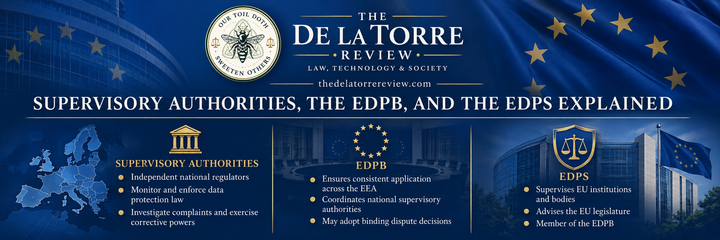
- The other authorities have a substantive role. A relevant and reasoned objection can temporarily block the lead authority’s draft decision. If the disagreement persists, the matter must be submitted to the consistency mechanism for a binding European Data Protection Board decision. (Judgment, ¶¶ 53–55.) See, Who Enforces EU Data Protection Law? Supervisory Authorities, the EDPB, and the EDPS Explained
(2) Other authorities can act in defined circumstances
The Court identified exceptions to the lead authority’s general competence:
- Locally focused matters: Article 56(2) covers a complaint or possible infringement relating only to an establishment in one Member State or substantially affecting individuals only there. The authority must notify the lead authority, which decides whether to handle the case. If it declines, the notifying authority proceeds under the cooperation rules. (Judgment, ¶¶ 58, 60–62.)
- Urgent protection: Article 66 permits exceptional provisional measures with effects in the authority’s own territory for up to three months. An authority seeking urgent final measures may request an urgent Board opinion or binding decision. (Judgment, ¶ 59.)
- Failures of mutual assistance: Where the lead authority fails to provide requested information, the GDPR provides routes involving provisional measures and Board intervention. The Court explained that judicial enforcement may be available through those routes, subject to the applicable conditions. (Judgment, ¶ 71.)
The governing test is therefore conditional: a non-lead authority may bring proceedings concerning cross-border processing where the GDPR gives it competence to adopt an infringement decision and the cooperation and consistency procedures are respected. (Judgment, ¶ 75.)
(3) Establishment and enforcement competence are separate questions
The controller or processor need not have its main establishment—or another establishment—in the authority’s Member State for that authority to exercise its Article 58(5) litigation power.
The processing must nevertheless fall within the GDPR’s territorial scope, and the authority must have the required competence. (Judgment, ¶¶ 76–84.) See, Territorial Scope of GDPR.
The Court also examined the connection between Facebook Belgium’s activities and the processing undertaken by Facebook Ireland. Facebook Belgium’s advertising promotion and engagement with EU institutions were inextricably linked to the processing at issue. The processing therefore occurred in the context of that establishment’s activities. This connection did not dispense with the separate requirement that the Belgian authority be competent to act. (Judgment, ¶¶ 86–96.)
- This reasoning echoes Google Spain, where the connection between local advertising activities and the search engine’s processing brought that processing within EU data-protection law. In Facebook Ireland and Others, the Court expressly relied on Wirtschaftsakademie to reaffirm that processing “in the context of” an establishment’s activities must not be interpreted restrictively. (Judgment, ¶ 91, citing Wirtschaftsakademie, ¶ 56.) See also Google Spain: The “Right to Be Forgotten”—While the Past Remains and Wirtschaftsakademie: When a Facebook Page Creates Joint Control.
(4) Older proceedings do not automatically terminate
The GDPR did not automatically end proceedings pending when it became applicable on 25 May 2018.
- Proceedings concerning earlier infringements could continue under Directive 95/46. Proceedings concerning later infringements had to satisfy the GDPR’s rules on competence, cooperation, and consistency. Starting a case before the GDPR became applicable did not preserve unrestricted authority over subsequent conduct. (Judgment, ¶¶ 97–105.)
- The Court further held that Article 58(5) has direct effect: a supervisory authority may rely on it to bring or continue proceedings against private parties even without specific national implementation. That holding does not remove the GDPR’s limits on which authority may act. (Judgment, ¶¶ 111–113.)
Advocate General Bobek: shared enforcement responsibility
Advocate General Michal Bobek likewise rejected the idea that the lead authority was the sole enforcer in cross-border cases. He emphasized the other authorities’ participation, the Board’s dispute-resolution role, and mechanisms for addressing administrative inaction. He also rejected unilateral enforcement that disregarded the GDPR’s cooperation framework. (Opinion, points 111–121.)
The Court expressly drew on his analysis when explaining why the lead authority cannot ignore other authorities’ views. The Opinion and Judgment share the central premise: leadership operates within a system of shared responsibilities and mandatory procedures. (Judgment, ¶ 53; Opinion, points 111–112.)
What the Court Did—and Did Not—Decide
The Court confirmed that the one-stop shop does not categorically prevent a non-lead authority from bringing proceedings concerning cross-border processing.
It did not give the Belgian authority unconditional permission to proceed. The national court had to determine whether the GDPR’s competence rules and procedures were satisfied. Nor did the CJEU decide whether Facebook’s tracking practices were lawful. (Judgment, ¶¶ 73–75.)
The Court also noted a distinction relevant to tracking disputes: storing and accessing information through cookies falls under the ePrivacy framework, outside the GDPR’s one-stop shop, while other processing of the resulting personal data may fall within the GDPR mechanism. The applicable enforcement framework therefore depends on the operation being challenged. (Judgment, ¶ 74.)
Conclusion
Facebook Ireland and Others preserves the one-stop shop while defining its limits. The lead authority ordinarily directs cross-border enforcement, but other authorities retain meaningful roles and specified powers to act.
For practitioners, the essential questions are which authority is competent, under which provision, and whether the required procedures have been followed.
Sources and Useful Reading
Sources
CJEU judgments, Advocate General opinions, and related case materials are available through InfoCuria, the Court of Justice of the European Union’s official case-law database. The case can be located using Case C-645/19, Facebook Ireland and Others.
- Judgment: Grand Chamber, 15 June 2021, Facebook Ireland Ltd and Others v Gegevensbeschermingsautoriteit, ECLI:EU:C:2021:483.
- Advocate General’s Opinion: Michal Bobek, Case C-645/19, Facebook Ireland Ltd and Others v Gegevensbeschermingsautoriteit, delivered 13 January 2021, ECLI:EU:C:2021:5.
Useful reading from The de la Torre Review
- EU Data Protection Law and the General Data Protection Regulation (GDPR) — A comprehensive guide to Europe’s data-protection framework, including its scope, principles, individual rights, compliance obligations, and enforcement structure. Provides broader context for the allocation of supervisory powers examined in Facebook Ireland and Others. Read the Article—free membership required.
- Weltimmo: When One Representative May Create a Local Establishment — Explains the flexible concept of establishment and the distinction between applicable law and supervisory powers under Directive 95/46. Facebook Ireland and Others addresses those related questions within the GDPR’s newer framework for cross-border enforcement. Read the Article.
- Wirtschaftsakademie: When a Facebook Page Creates Joint Control, C-210/16 — Beyond joint control, this case examines the connection between Facebook’s local advertising activities and processing undertaken elsewhere. Facebook Ireland and Others expressly cites paragraph 56 for the principle that processing “in the context of” an establishment’s activities must not be interpreted restrictively. (Judgment, ¶ 91.) Read the Article.
- Google Spain: The “Right to Be Forgotten”—While the Past Remains Online, C-131/12 — Provides an earlier illustration of the link between a local establishment’s advertising activities and processing performed elsewhere. It offers useful background to the Court’s finding that Facebook Belgium’s activities were inextricably linked to Facebook Ireland’s processing. (Judgment, ¶¶ 92–95.) Read the Article.
- BE: When GDPR Complaints and Court Proceedings Run in Parallel — Explains how administrative and judicial remedies may operate concurrently and independently, subject to national rules ensuring effective protection and addressing conflicting decisions. BE cites Facebook Ireland and Others for the requirement that competent national authorities ensure a high level of protection of fundamental data-protection rights. (BE, para. 43, citing Facebook Ireland and Others, para. 45.) Read the Article.
- Who Enforces EU Data Protection Law? Supervisory Authorities, the EDPB, and the EDPS Explained — Provides the modern GDPR framework for understanding the national supervisory authorities and the cross-border cooperation system that succeeded the Directive-era enforcement structure considered in Weltimmo. Read the Article.
- Territorial Scope of GDPR — Explains when processing falls within Article 3, including processing conducted in the context of an EU establishment’s activities. It provides the territorial-scope framework that must be distinguished from the allocation of enforcement competence examined in Facebook Ireland and Others. (Judgment, ¶¶ 79–84, 89–95.) Read the Article.
- What Is an ‘Establishment’ Under EU Law? — Explains both “establishment” for territorial scope and “main establishment” for identifying the lead supervisory authority. That distinction helps explain why a local presence does not, by itself, determine which authority may act against cross-border processing. (Judgment, ¶¶ 50, 63, 80–84.) Read the Article.



Comments ()